Think of electrical grounding as an emergency exit for dangerous electricity. If a power surge or lightning strike hits your home, grounding safely directs all that excess power straight into the earth—preventing house fires, electric shocks, and destroyed appliances.
Need help with your grounding? Contact our team today
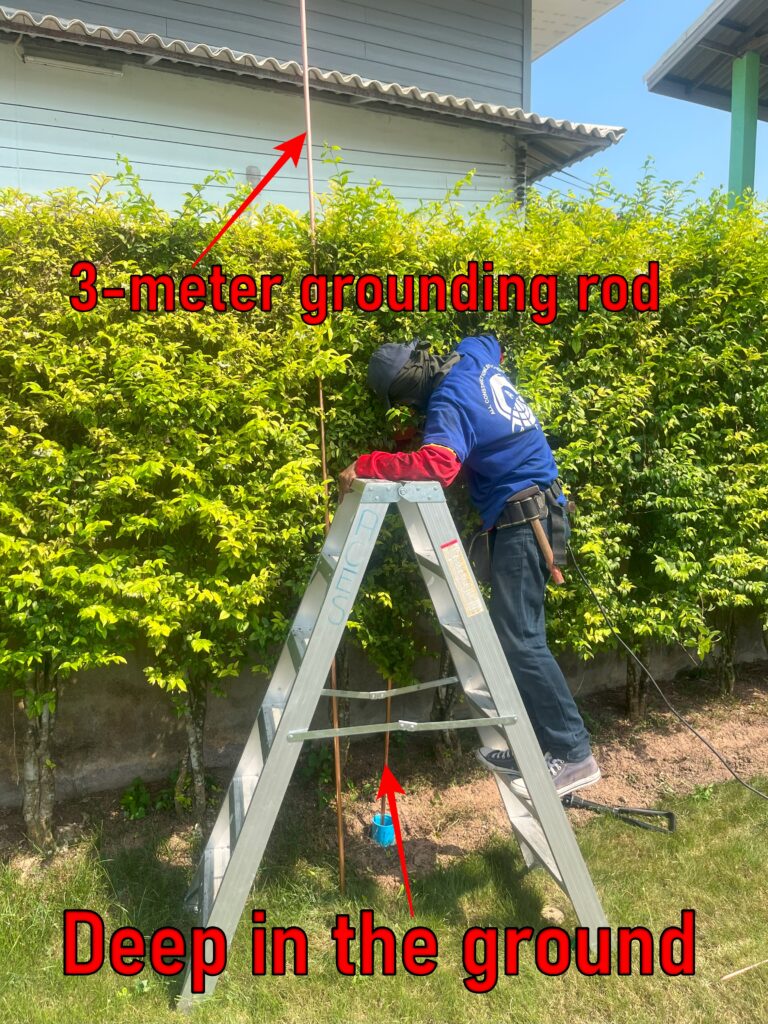
Driving a 3-meter copper ground rod deep into the earth. Thai electrical safety regulations require going this deep to ensure dangerous electrical faults have a guaranteed escape path into the ground.
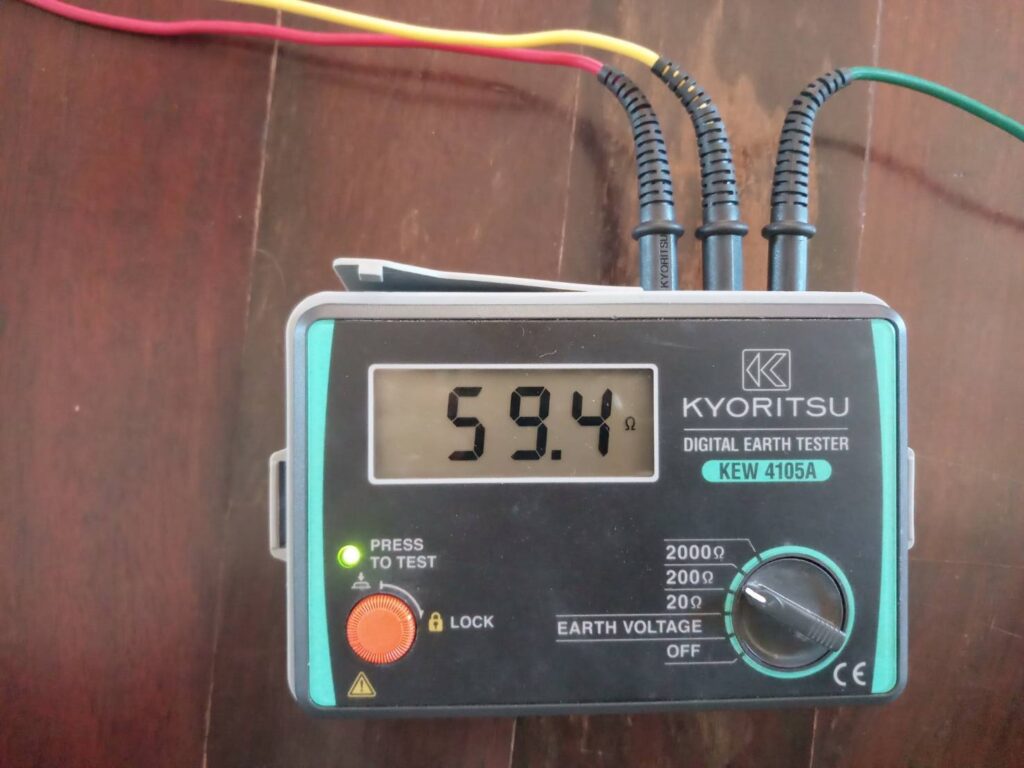
BEFORE (FAILED): High resistance reading. By law in Thailand, electrical grounding must test at 5 ohms or less. A reading above 5 ohms means stray electricity cannot escape safely into the ground—putting your home and family at serious risk of shock and fires.
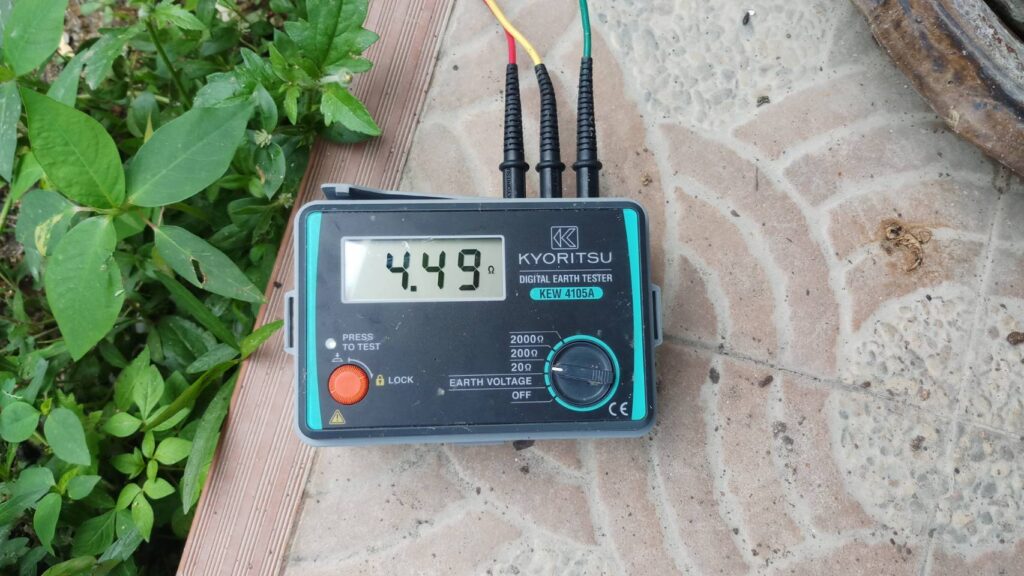
AFTER (PASSED): Verified reading of 4.49 ohms. This legally complies with Thailand’s official PEA safety code (under 5 ohms), proving that all power surges and dangerous fault currents will safely divert into the earth.
2. Controls Stray Currents Before They Electrify Your Home
Electricity takes every path available, not just the wire. Without grounding, stray voltage leaks into appliance casings, metal conduit pipes, and steel structures. Proper earthing locks down the flow of electricity, ensuring stray current is immediately dumped into the earth rather than waiting to shock the next person who touches a light switch or metal doorframe.
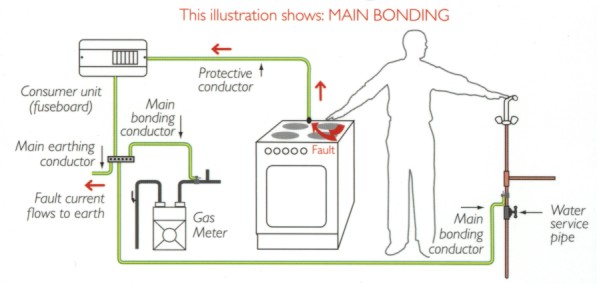
Why bonding and grounding protect you: If a fault electrifies a metal stove or appliance casing, proper grounding routes that stray current safely into the earth. Without this, touching an appliance and a metal water pipe at the same time turns your body into the circuit.
3. Stops Grid Surges From Frying Your Expensive Electronics
Thailand’s power grid experiences frequent spikes, brownouts, and lightning surges. Grounding acts as a permanent pressure valve. When sudden high voltage hits your system, the ground rod absorbs the shock and stabilizes the line—stopping surges from blowing circuit boards in your inverter air conditioners, pool pumps, and expensive smart home controls.
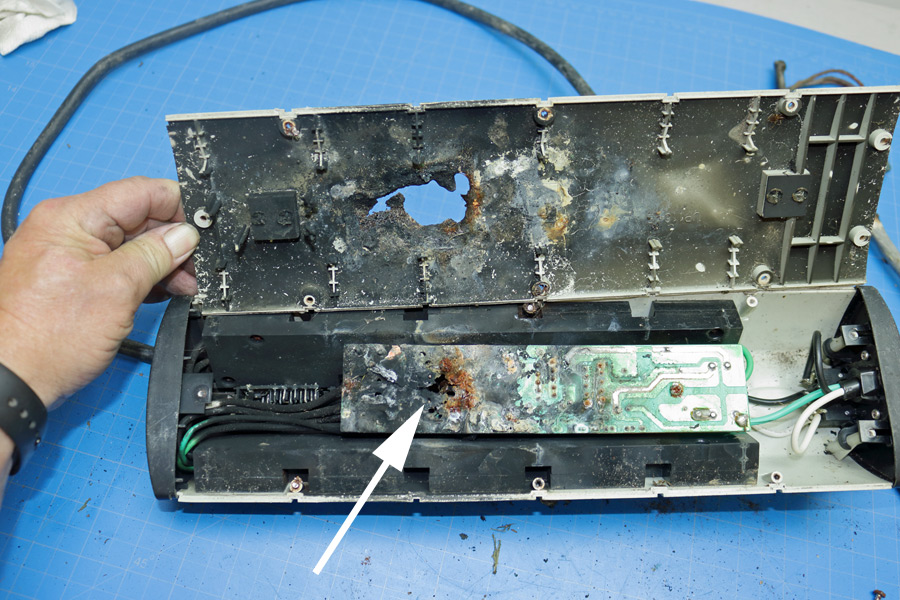
Grid surges and lightning protection: Without a dedicated low-resistance grounding path, sudden voltage spikes from grid fluctuations and lightning travel directly into your property's circuits—destroying expensive inverter appliances and electronics.
4. The Ground Rod: A Dedicated Escape Route for Lethal Voltage
Electricity always seeks the path of least resistance to the earth. If you have a certified 3-meter copper ground rod driven deep into moist soil, the current safely races outside into the ground. If your property has no ground rod—or a cheap rod driven only a few inches into dry rubble—the easiest path to the earth is your barefoot body.
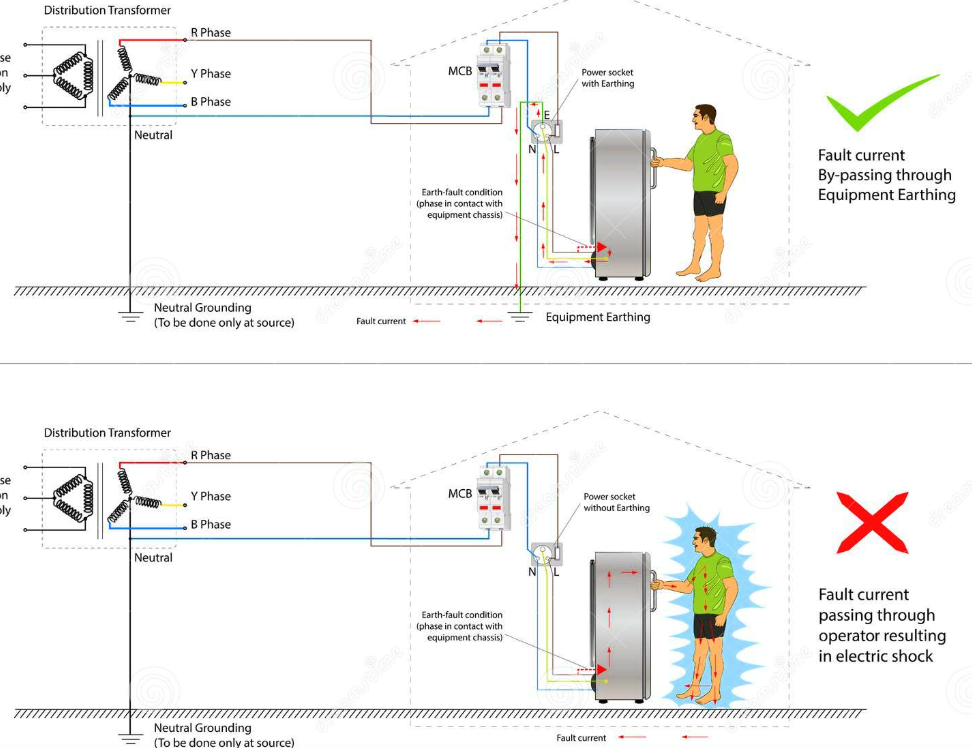
Why a ground rod is essential: With a dedicated ground rod installed (top), dangerous fault current safely bypasses you straight into the earth. Without a ground rod (bottom), that lethal shock passes directly through your body.
5. Prevents Property Destruction, Severe Injury, and Fatal Shocks
Substandard or missing grounding is a silent killer. In a wet environment like a bathroom, an ungrounded instant shower heater or washing machine can turn a loose live wire into instant electrocution. Proper grounding diverts that fatal surge in milliseconds, instantly tripping the safety breaker before a fire starts or someone loses their life.
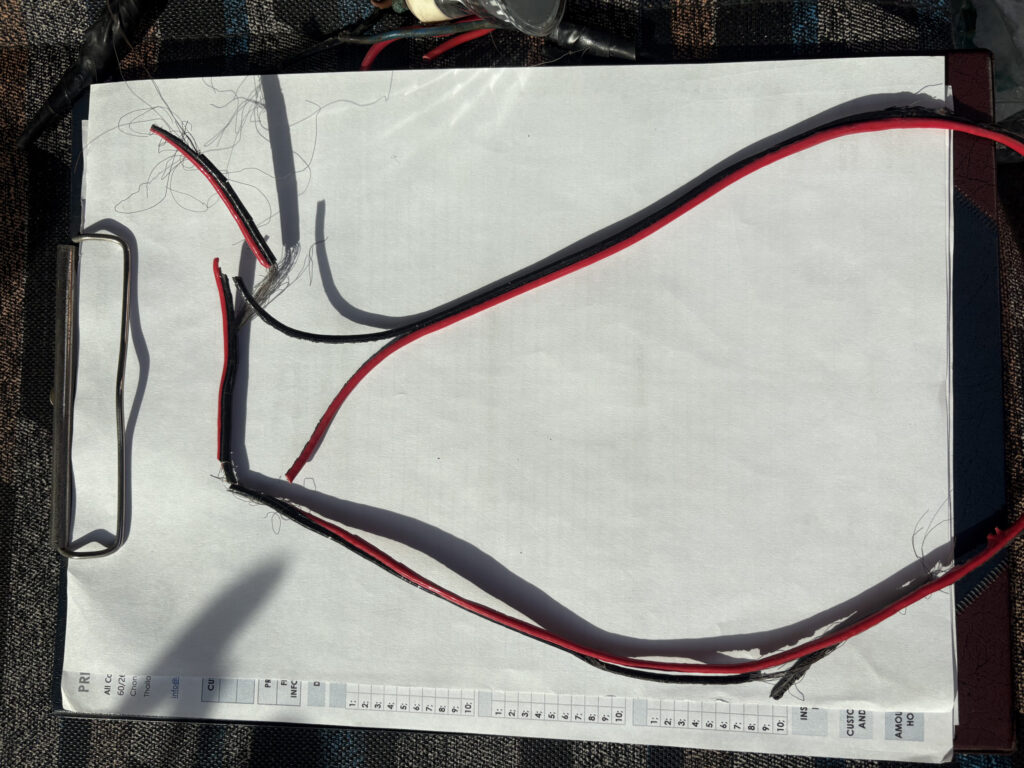
Ticking time bomb: Thin automotive audio wire used to run a high-draw water heater. When dangerous shortcuts like this fail without a dedicated ground rod, there is nothing to stop lethal current from passing straight through your body.
In Thailand, electrical safety regulations require a ground reading of 5 ohms or less. A higher reading means fault current cannot escape safely. Do not trust an electrician who merely connects a green wire and leaves—demand to see an earth resistance test on a certified digital tester.
One quick test could save your family’s lives.